




AI Visibility 101: How Brands Show Up in AI
TL;DR: AI visibility is when a brand is mentioned when people ask a Large Language Model (LLM) a question, and how the answer describes them. Four metrics measure a brand's AI visibility: how often it appears in answers, its share of voice relative to competitors, which sources the models quote, and the sentiment used.
What is AI visibility?
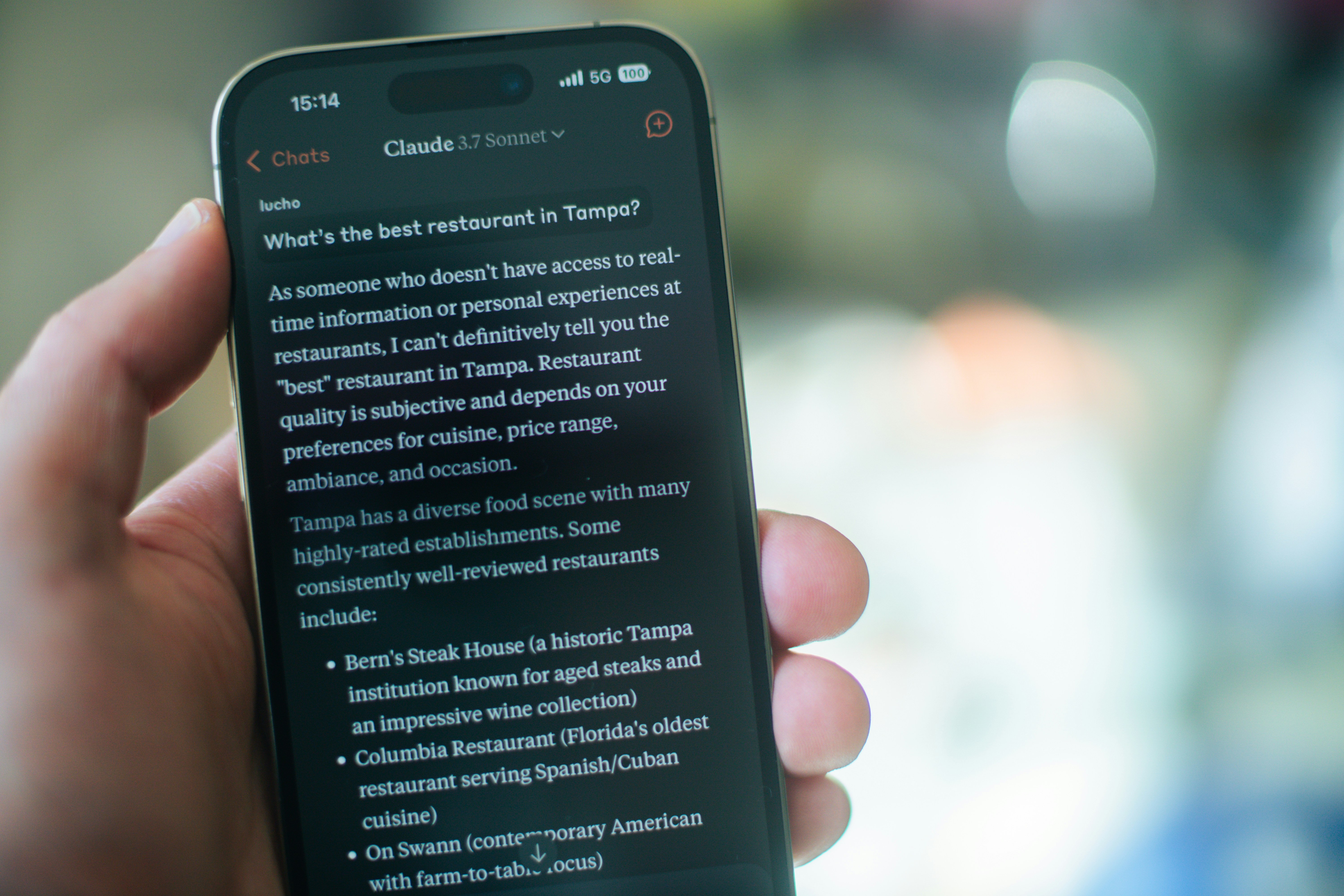
If you open ChatGPT right now and ask it for the best tool or the top vendor in your space, what does it say?
Usually, the model types a concise paragraph and mentions two or three businesses. If your brand isn't there, you’re probably invisible to the AI agent. So how do you become visible? And is it even worth the effort?
Well, with Google AI Overviews reaching over a billion people a month, potential buyers are using these tools to make decisions, whether they know it or not. But this change is a huge opportunity. When you secure a spot in AI summaries, you meet prospects exactly at the point of decision and backfill demand that may slip into the hands of your competitors.
AI visibility is simply the 2026 version of the timeless business question: what channels are potential customers using to find you? In this guide, you’ll learn how Large Language Models (LLMs) choose what businesses to recommend, and how you can position your brand to make the cut.
How is AI visibility measured?
AI visibility breaks down into four measures. Each one answers a question the others can't, and any single measure on its own won’t give you the full picture. Here is what they tell you:
1. Overall presence
The baseline metric is how frequently your brand is visible in AI answers, and which specific models include you. Rather than chasing a perfect score, success is measured by the gap between you and your competitors.
For instance, a 35% visibility score on a core industry prompt might seem low in isolation. However, if your closest competitor appears only 12% of the time, then 35% represents a dominant market position. Because every language model constantly changes its recommendations, you must track the competitive spread, prompt by prompt and platform by platform, to see the true picture at any given moment.
2. Share of voice
Traditional Google searches crown a single winner at the top of the page, but AI responses don't work that way. One generated summary might recommend six different brands, while the next prompt might only mention two.
Because of this format, your share of voice measures the total volume of mentions you own out of the entire conversation. Tracking this metric helps you calculate your true slice of the market and uncover emerging competitors you didn't expect.
3. Which sources get quoted
Every LLM answer is based on a foundation of sources the model trusts, which range from major publishers to niche listicles and forum posts on sites like Reddit. Are you on any of them? A page the models quote hundreds of times is one you want your name on, as their trust in it carries over to whatever it says about you. Your own website can even serve as a source if the LLM deems it credible. Temso ranks the source pages for your market, so you can see where you appear already and where competitors are claiming space.
However, a model can read your website without citing you in the answer, which happens because the core answer is hidden inside long paragraphs. To fix this, place key data near the top of the page in short, clearly labeled sections. Or because the author or publisher lacks clear credentials. To fix this, include authoritative, real-world bylines that the model can verify.
4. How AI describes you
The last measure is the sentiment of how the LLM describes your brand. While getting cited is half the work, you also need to ensure the AI conveys the right message. For example, Temso tracks sentiment as positive, neutral, or negative for each model, along with the attributes the models assign to your brand. You’re also shown which sources are influencing the overall narrative and sentiment, so you can fix anything incorrect.
How to improve AI visibility step by step
You can improve your brand's AI visibility by influencing what models read about you and if they trust that information. However, work like this can't be done by hand because the models change their answers daily, draw on hundreds of sources, and don’t always use the same sources. You can't read all of that, track it over time, and act on it without a tool like Temso AI, which monitors the models for you, tells you what's impacting your visibility, and gives you the steps to fix them. You can learn more with our quick start guide to GEO with Temso.
Identify quick wins
If you are new to AI brand visibility, use the Temso AI agent to find your starting point. The assistant analyzes your market data and pinpoints the tasks you can complete that yield immediate results. It’s really like having your own to-do list made by an expert AI search strategist.
Target existing AI sources
AI models rely on and trust sources that they know are written by people, such as discussion forums like Reddit, YouTube transcripts and established industry comparison lists. Temso's Engage view ranks these third-party platforms by opportunity and shows your presence score on each. So, when it flags a platform like YouTube as a high opportunity where you score low, you know the models already cite that platform in your category, and you aren't on it.
Secure brand mentions on these third-party platforms or create your own content on them. Temso also suggests how you can do that, rather than focusing solely on your own website.
Fill content gaps and refine structure
You cannot win a citation for a topic you completely ignore. If competitors get featured because they wrote the definitive guide to a specific industry problem and you didn't, the model simply has nothing of yours to pull from. Temso’s AI agent identifies your current content gaps and can help you create the content.
Just like with SEO, AI scrapers are lazy, and they’ll skip over excellent information if it sits buried inside a wall of text. So, state your core thesis or answer right away at the top of the page under a clear header, then use brief, punchy sections so the model can easily clip the data and credit your site.
Manage brand perception
Pay close attention to how the models describe your business alongside your competitors. If an AI tool generates an unfavorable description, trace the response back to the primary source that feeds that perspective, then fix the issue directly at the root.
Because AI models are constantly updating and competitors publish new material, your brand's AI visibility will always be in flux. But brands that establish an early presence create a compounding lead that becomes very difficult for competitors to claw back later.
Conclusion
When buyers turn to AI tools for recommendations, your visibility score dictates if your business is likely to make the cut. To get on the shortlist, you must establish a presence on the third-party source sites the models trust, and format your website content so their scrapers can easily extract your data.
However, you cannot manage AI visibility with manual spot checks. AI responses change constantly from one day to the next, meaning an isolated search gives you a distorted view of your actual market share.
Temso eliminates the guesswork of AI search by tracking core prompts across every major model. The platform aggregates your presence, share of voice, source citations, and brand sentiment into a single dashboard, which helps you spot competitive threats and prove your optimization ROI with hard data. Better yet, Temsos built-in AI agent reads your data and gives you the tasks you need to complete to improve your overall visibility and make AI search your next growth channel.
Discover your standing in the new era of search. Track your AI visibility with Temso.
Frequently Asked Questions
What is AI visibility?
AI visibility tracks your brand's presence in the answers generated by platforms like ChatGPT, Gemini, and Google AI Overviews. It tracks if your business gets mentioned when a user asks a relevant question, and the sentiment the model uses to describe you.
How do you measure a brand's AI visibility?
True visibility relies on a combination of four metrics: your overall appearance rate (presence), your share of voice compared to competitors, the web sources the AI quotes, and the sentiment of the text. Relying on just one of these metrics gives an incomplete picture, so you need to look at all four together to build a comprehensive view.
How does AI visibility differ from traditional SEO?
Standard SEO focuses on climbing a list of blue links with keywords. AI visibility is different because there is no numerical rank to chase. Instead, the model reviews the web, synthesizes the data, and writes a single narrative. Your brand either makes it into the final text or it is completely left out.
What is the best way to check my brand's AI visibility?
You can run a quick test by typing customer queries directly into various AI tools to see if your name pops up. However, manual checks offer limited value because AI answers change constantly and vary widely across models. To get a true, accurate trend line, Temso AI automates the process at scale by tracking your key prompts and competitors across every major platform daily. From there, the platform's AI agent will give you the tasks and tools you need to improve your AI search visibility.