




Traditional search rankings are nearly useless for measuring AI visibility. A Louise Linehan analysis of 15,000 long-tail queries in August 2025 found that 80% of sources cited by AI engines don't appear in Google's top 100 for the same query — and only 12% overlap with Google's top 10. Gartner predicts traditional search engine volume will drop 25% by 2026 as AI chatbots become the default answer engines.
That disconnect is a real problem for marketing teams. You can publish consistently, rank well on Google, and still be completely invisible when someone asks ChatGPT or Perplexity a question your product answers perfectly.
Answer engine optimization (AEO) is the practice of structuring content so AI engines like ChatGPT, Perplexity, and Google AI Overviews cite your brand in their generated answers. The tools below cover the full pipeline — research, creation, optimization, publishing, and the citation tracking that tells you whether any of it is actually working. (If you're looking specifically at standalone visibility trackers rather than full content pipelines, see our guide to the best AI visibility tools in 2026.)
How to choose an AI content pipeline tool
Not every tool in this category does the same thing. Before committing, check each option against these four criteria:
- Pipeline stage coverage: Does the tool handle research, creation, optimization, publishing, or AEO citation tracking? Most cover one or two stages. A few cover the whole pipeline.
- Citation monitoring scope: Does it track at least ChatGPT, Perplexity, Gemini, or Google AI Overviews? Broader engine coverage means fewer blind spots as AI search fragments across platforms.
- Actionability: Does the tool surface recommended next steps grounded in real answer engine data, or does it just show raw mention counts? Raw counts without context don't tell you what to build next.
- Team fit: Lean in-house teams, agencies managing multiple clients, and enterprise content operations have different workflow and pricing needs. Each tool below notes who it serves best.
The 10 tools at a glance
| Tool | Pipeline coverage | Engines tracked | Starting price | Best for |
|---|---|---|---|---|
| Temso | Full pipeline | 8 | $89/mo | In-house teams & agencies |
| Surfer AI Tracker | Tracking + optimization | 5 | $182/mo | Existing Surfer SEO users |
| Profound | Optimization + publishing | Multiple | Not disclosed | Enterprise content teams |
| Contently | Optimization + tracking | 4 | Not disclosed | Enterprise content libraries |
| Jasper Rewriter | Optimization (rewrites) | Generative engines | Not disclosed | Large enterprises |
| Superlines | Full (automated) | 10+ | €379/mo | Growth teams automating output |
| Ayzeo | Research + creation | 5 | Tiered by daily output | Multilingual content teams |
| Reach360 | Tracking + publishing + CRM | 4 | Free tier | Solopreneurs & small websites |
| Gauge | Tracking | 5 | Not disclosed (demo) | A point solution, not full-stack |
| AEO Engine | Managed (done-for-you) | — | Month-to-month | Teams outsourcing the pipeline |
1. Temso: Full-pipeline AEO tracking with content creation built in
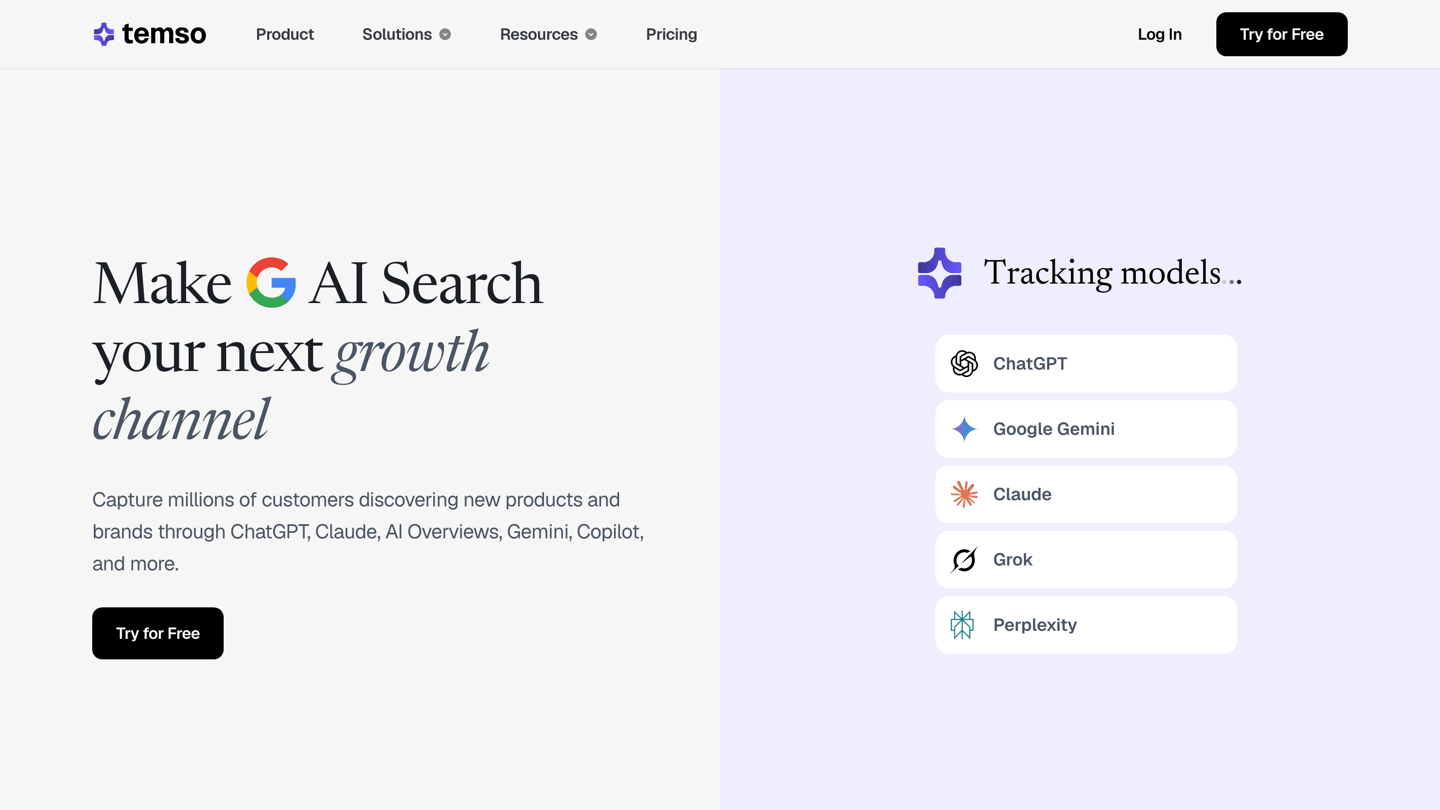
Temso is the broadest-scope option on this list. It tracks brand visibility, citations, sentiment, and competitor share of voice across ChatGPT, Claude, Gemini, Perplexity, Copilot, Google AI Overviews, Google AI Mode, and Grok — and pairs that tracking with a Content for AEO module and a Website Audit for technical AI-crawl health.
What separates Temso from standalone trackers is the feedback loop it closes. Citation data flows directly into content recommendations, so you're never manually reconciling what AI engines cite today with what your team should build or fix next.
Core modules include AI Visibility Tracker, Citation Analytics, Prompt Intelligence, Competition Benchmarking, and AI Bot Analytics for real-time crawl monitoring. All plans include unlimited seats, multiple projects, multilingual tracking across every location, and API/MCP integrations. Pricing starts at $89/month, and the platform is rated 4.8 on G2. Signals are available within days; first recommended actions are ready in week one.
Teams have used that feedback loop to move fast: Doctorflix lifted its AI visibility 20 points with the Temso agent, and Sun Matters turned a national TV appearance into lasting AI search rankings.
Best for: Marketing leads at 10-200 person companies and agencies managing multiple client accounts who want AEO handled in-house without per-seat pricing.
Worth noting: Citation movement compounds over weeks, not days. Temso surfaces recommended actions immediately, but content impact takes time to register in AI engine responses.
2. Surfer AI Tracker: Real-browser citation monitoring tied to on-page optimization
Surfer AI Tracker monitors brand mentions and citation data across ChatGPT, Gemini, Google AI Overviews, Google AI Mode, and Perplexity using real browser scraping instead of API calls — a distinction that matters. API-based monitoring captures only what platforms choose to expose; browser scraping captures the live citations and source data users actually see. Coverage expanded in July 2025 to include Google AI Mode and Perplexity.
Surfer AI Tracker integrates directly with Surfer's Content Editor and Content Audit modules, connecting citation insights to on-page fixes without context-switching between tools.
The Pro plan is $182/month for 50 prompts tracked daily. The Peace of Mind plan is $299/month for 100 prompts daily. More than 2,800 companies use the platform.
Best for: Teams already using Surfer SEO for content grading who want AI citation tracking inside the same workflow.
Worth noting: Surfer AI Tracker does not include content creation or publishing. Tracking and optimization are covered, but production requires a separate tool.
3. Profound: Competitor-benchmarked content optimization with CMS publishing
Profound optimizes content using live citation data pulled from real answer engine activity and automatically benchmarks every piece against competitors. Three pre-built agents handle Content Optimization, AEO FAQ Generation, and YouTube Metadata Optimization.
Every recommendation is grounded in what AI engines are citing right now — not historical keyword data. Brand Hub auto-inherits tone, positioning, personas, and writing rules across all agents, keeping rewrites consistent without manual governance overhead. Profound integrates CMS publishing and Slack delivery, and surfaces prioritized actions: FAQ gap fills, structural rewrites, and citation closures.
Best for: Content teams that need data-driven optimization with direct CMS-to-Slack delivery and minimal tool-switching.
Worth noting: Profound focuses on optimizing existing content. Upstream research and original content creation are outside the workflow. The platform is built for Fortune 500 companies, so it is best suited for large enterprises with dedicated content operations.
4. Contently LLM Optimization: Schema automation and weekly citation tracking for enterprise
Contently LLM Optimization tracks citation share weekly across ChatGPT, Perplexity, Gemini, and Google AI Overviews using 1,206+ conversational prompts. It automatically applies Article, FAQPage, HowTo, and Speakable schema markup, runs entity audits, and delivers six structural rewrite patterns engineered to lift AI citations after publishing.
The schema automation is the standout capability. Most content teams skip structured markup because it requires developer time; Contently handles it automatically and ties every change to weekly citation-share reporting. Enterprise customers — including RBC, Manulife, Microsoft, Dell, and Marriott — report a 4.1x improvement in AI-search citations versus baseline.
Best for: Enterprise content teams with large existing libraries that need automated schema work and weekly citation-share reporting at scale.
Worth noting: Coverage is post-publishing only. Contently does not manage upstream research, creation, or original drafting stages.
5. Jasper SEO/AEO/GEO Rewriter: Brand-safe bulk rewrites for generative answer engines
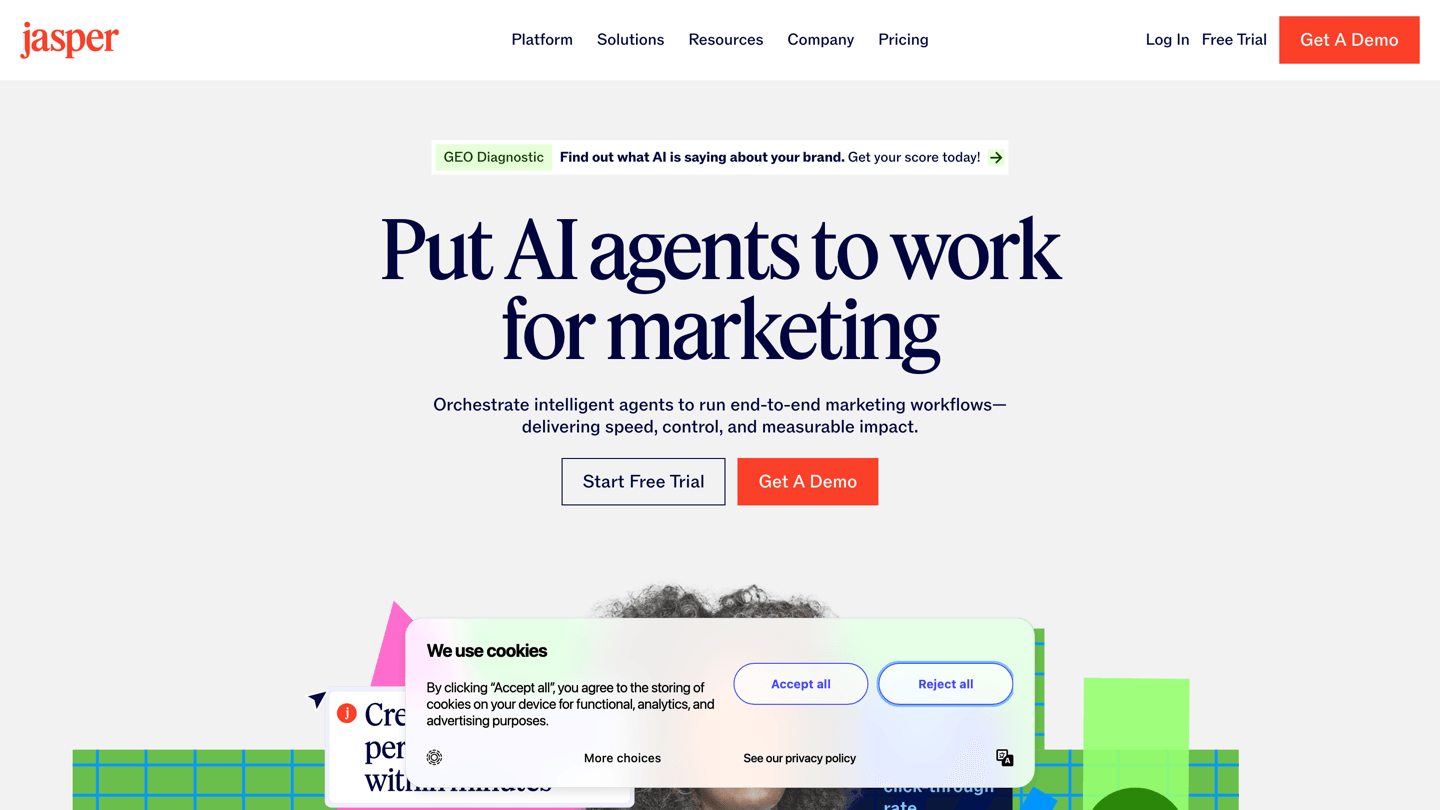
Jasper's SEO/AEO/GEO Rewriter is a dedicated agent that transforms existing blogs, product pages, category pages, and regional pages for generative answer engines and featured snippets — without sacrificing existing SEO rankings. It integrates with Jasper's Brand Voice, Style Guide, Knowledge Base, and Jasper IQ tools.
That ranking-preservation focus is what sets this agent apart from a generic AI rewriter. Teams with large content libraries can't afford to trade organic gains for AEO signals; Jasper's rewriter is engineered to move both metrics simultaneously.
Best for: Teams with substantial existing content libraries that need consistent, brand-governed rewrites at scale without risking organic ranking losses.
Worth noting: The Jasper rewriter is built exclusively for existing content, not from-scratch creation. It also requires prior setup of Brand Voice, Style Guide, and Knowledge Base to produce brand-consistent output at scale — all of which your team sets up independently, as there is no managed onboarding. Jasper is designed for large enterprise organizations that need to coordinate content production across multiple large teams.
6. Superlines: End-to-end agentic pipeline from prompt discovery to daily publishing
Superlines structures AI search work into four operational levels — Monitor, Analyze, Automate, and Autonomize. The full pipeline spans Prompt Discovery, Competitive Intelligence with fan-out analysis and winner scraping, and a 7-phase multi-agent system for daily content creation and publishing across 10+ AI engines.
It's the most aggressive automation option on this list. Teams can start with monitoring only and scale toward full daily publishing autonomy as confidence and capacity grow. MCP server integration enables no-code workflow automation via Claude Desktop or Cursor. The Growth plan is priced at €379/month.
Best for: Growth-stage teams or agencies that want to automate high-volume AI search content production with minimal manual steps.
Worth noting: Full autonomy mode requires developer-level setup for CMS connectors and API integrations. Superlines is not a plug-and-play option for non-technical teams.
7. Ayzeo: Research-to-draft content creation structured for AI citation from the start
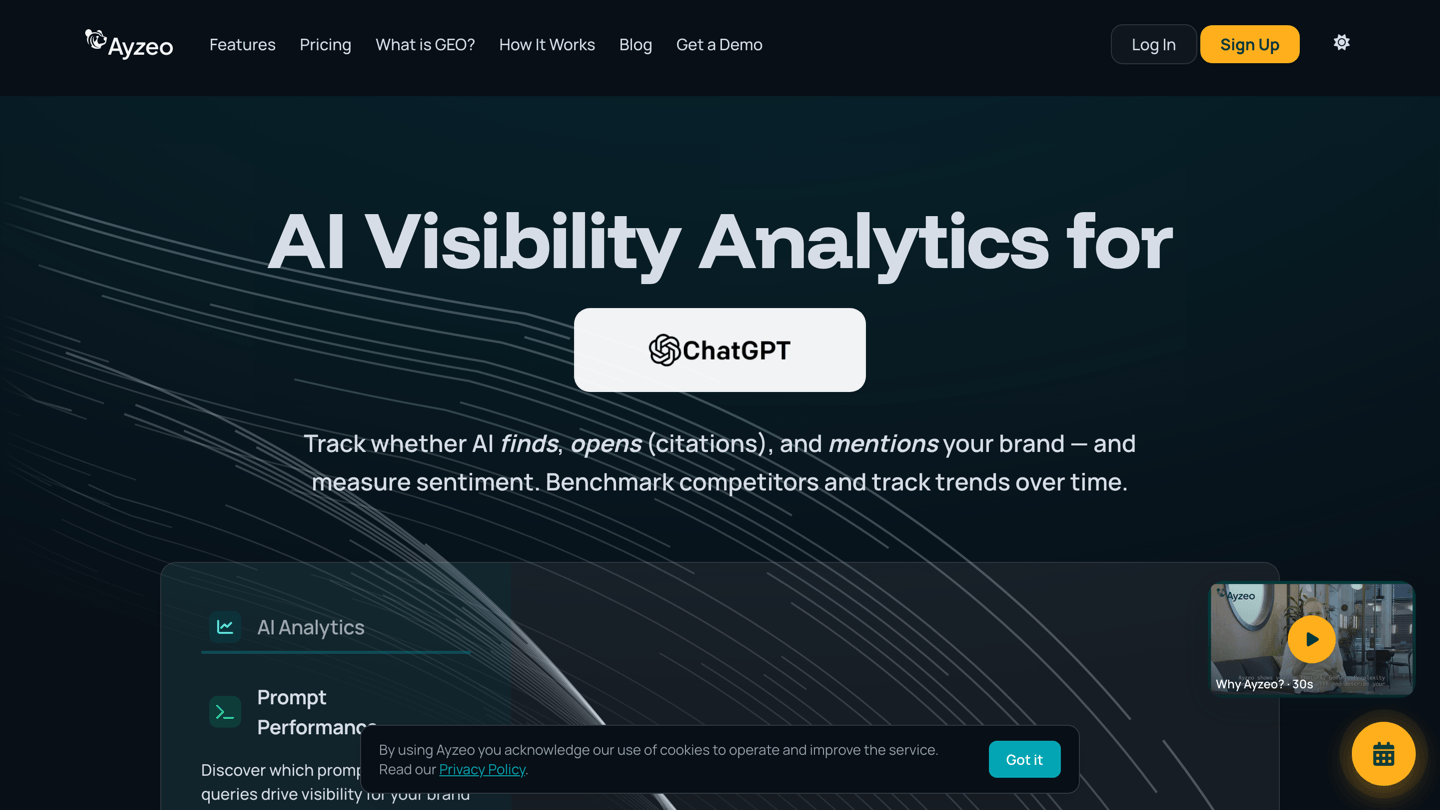
Ayzeo generates research-backed content using real-time web search data and structures it with answer-first formatting, self-contained answer capsules, FAQ schema, and structured headings designed for AI extraction. A separate Citation Analytics feature tracks AI citations independently from the creation workflow.
Most tools apply AEO structure as a retrofit step after drafting. Ayzeo builds citation signals into the initial creation, which reduces how much optimization work is needed later. The platform targets citations from ChatGPT, Claude, Gemini, Perplexity, and DeepSeek, auto-generates meta tags and schema markup suggestions, and supports 61 languages.
Volume tiers are based on daily output: 3 pages/day on Starter, 10 pages/day on Pro, and unlimited on Enterprise.
Best for: Teams publishing in multiple languages or regions who want citation-optimized drafts from the first write.
Worth noting: Ayzeo is explicit about timelines: meaningful citation improvements require approximately two months minimum from publishing. Plan accordingly.
8. Reach360: All-in-one AEO workspace with a free tier and agency mode
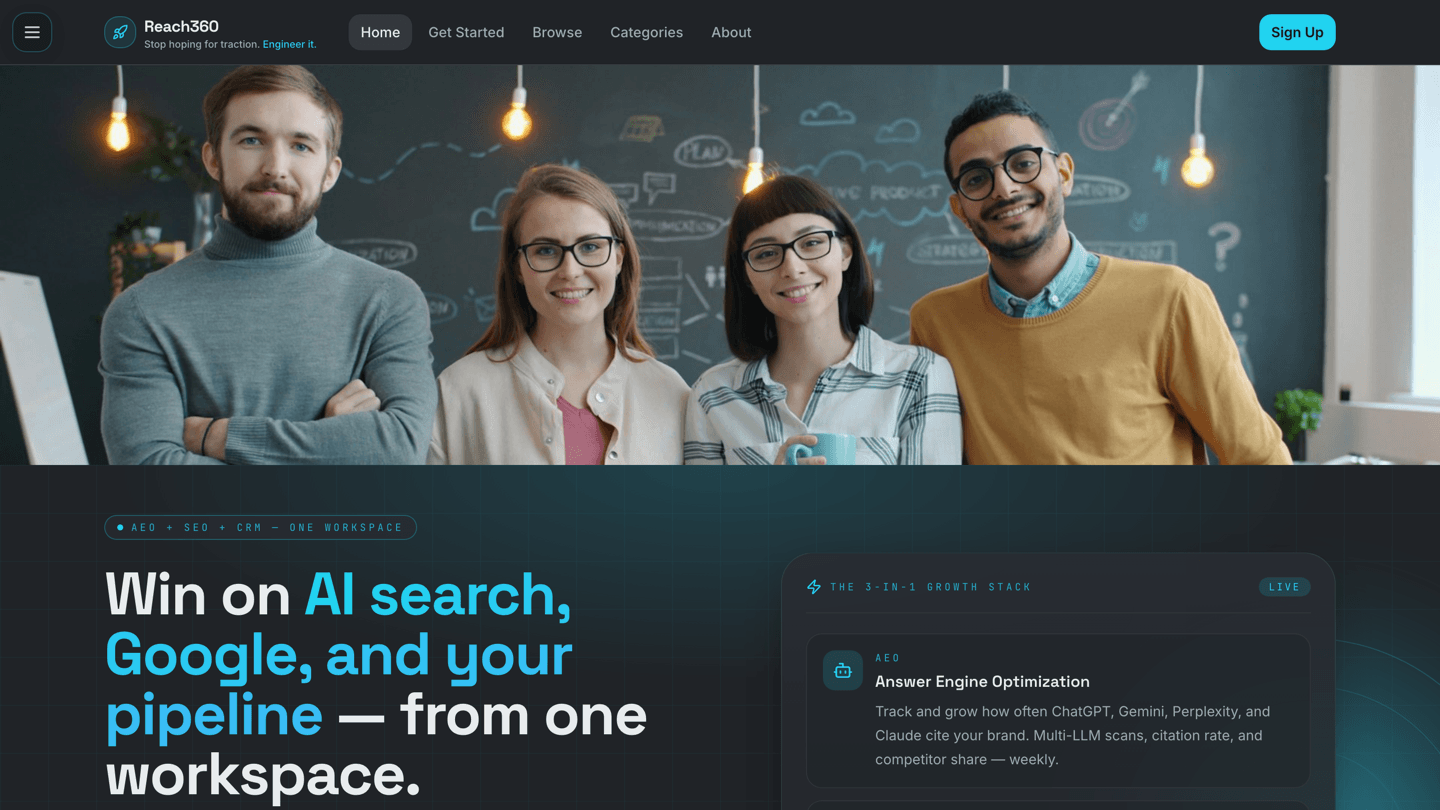
Reach360 combines AEO citation tracking, keyword research, automated weekly blog publishing, and a built-in CRM in one workspace. It tracks brand citations across ChatGPT, Gemini, Perplexity, and Claude weekly, and includes unlinked-mention reclamation and backlink aggregation for authority building.
The all-in-one positioning is designed to consolidate four to six point tools into one workspace. The free forever plan for in-house SMB teams requires no credit card, making it the lowest-friction entry point on this list for teams evaluating AEO for the first time. A white-label agency mode with multi-client workspaces serves agencies that need scalable AEO management without per-seat pricing.
Best for: Solopreneurs and small websites managing AEO in-house on a tight budget.
Worth noting: Broad coverage spanning citation tracking, CRM, and publishing means depth in any single area may trail purpose-built specialist tools.
9. Gauge: Purchase-intent citation tracking with platform-specific strategy guidance
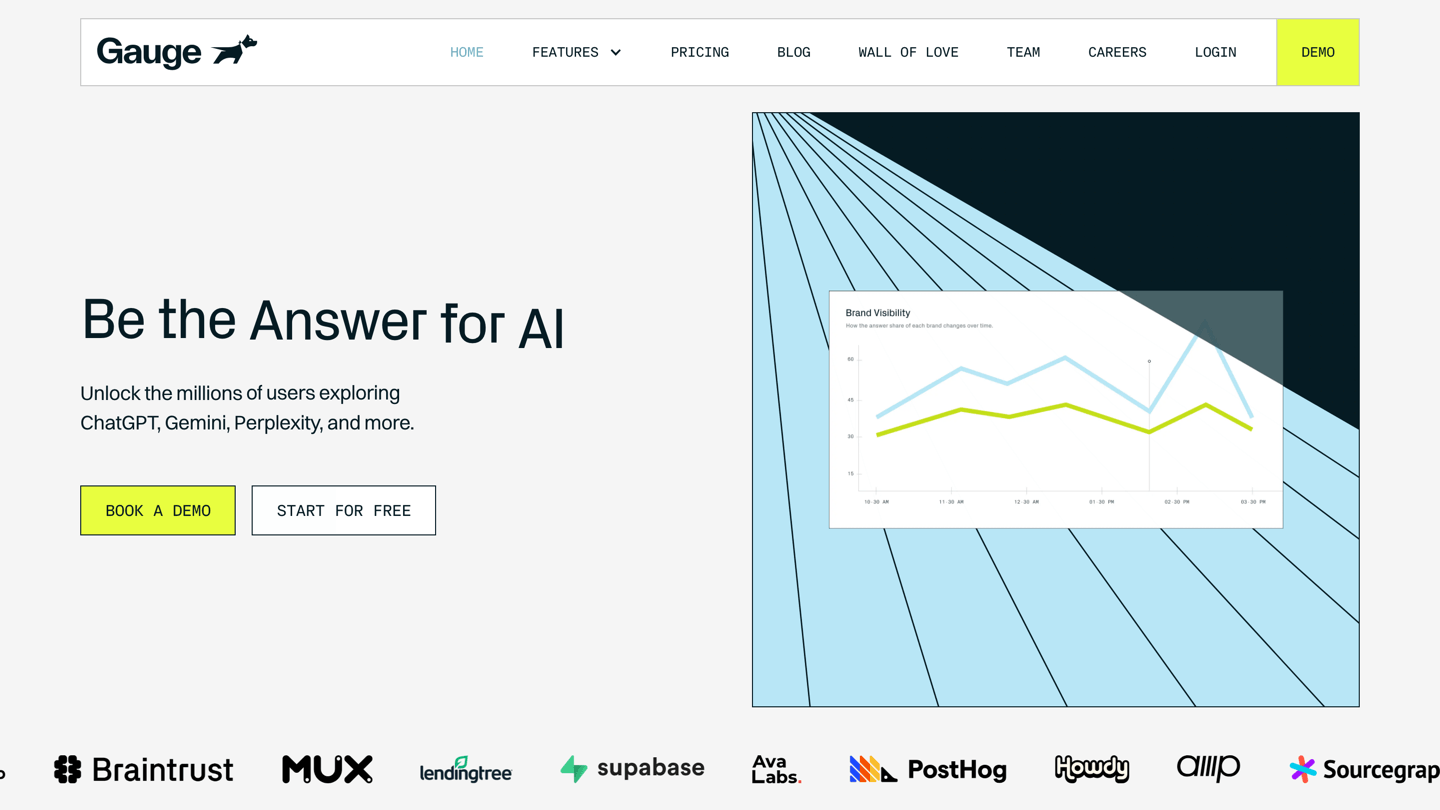
Gauge tracks brand mentions in AI-generated answers across ChatGPT, Perplexity, Google AI Overviews, Gemini, and Grok daily, using a Track-Analyze-Action framework focused on purchase-intent questions. The platform provides platform-specific guidance: ChatGPT favors comprehensive authoritative content, Perplexity favors cited sources, and Google AI Overviews respond to structured data and FAQ formats.
That platform-level differentiation is genuinely useful for B2B teams. Not all AI engines behave the same way, and content that earns Perplexity citations may require different structural choices than content targeting Google AI Overviews. Results from Gauge's published case studies include a PostHog visibility gain from 22% to 42% in four days, and a second client growing from 16.7% to 47.5% visibility with a 41x increase in LLM traffic over six months.
Best for: Teams that want a focused point solution for citation tracking, not a full-stack content pipeline.
Worth noting: Pricing is not publicly disclosed. A demo is required before you can evaluate cost fit.
10. AEO Engine: Managed publishing for teams that want the output without the stack
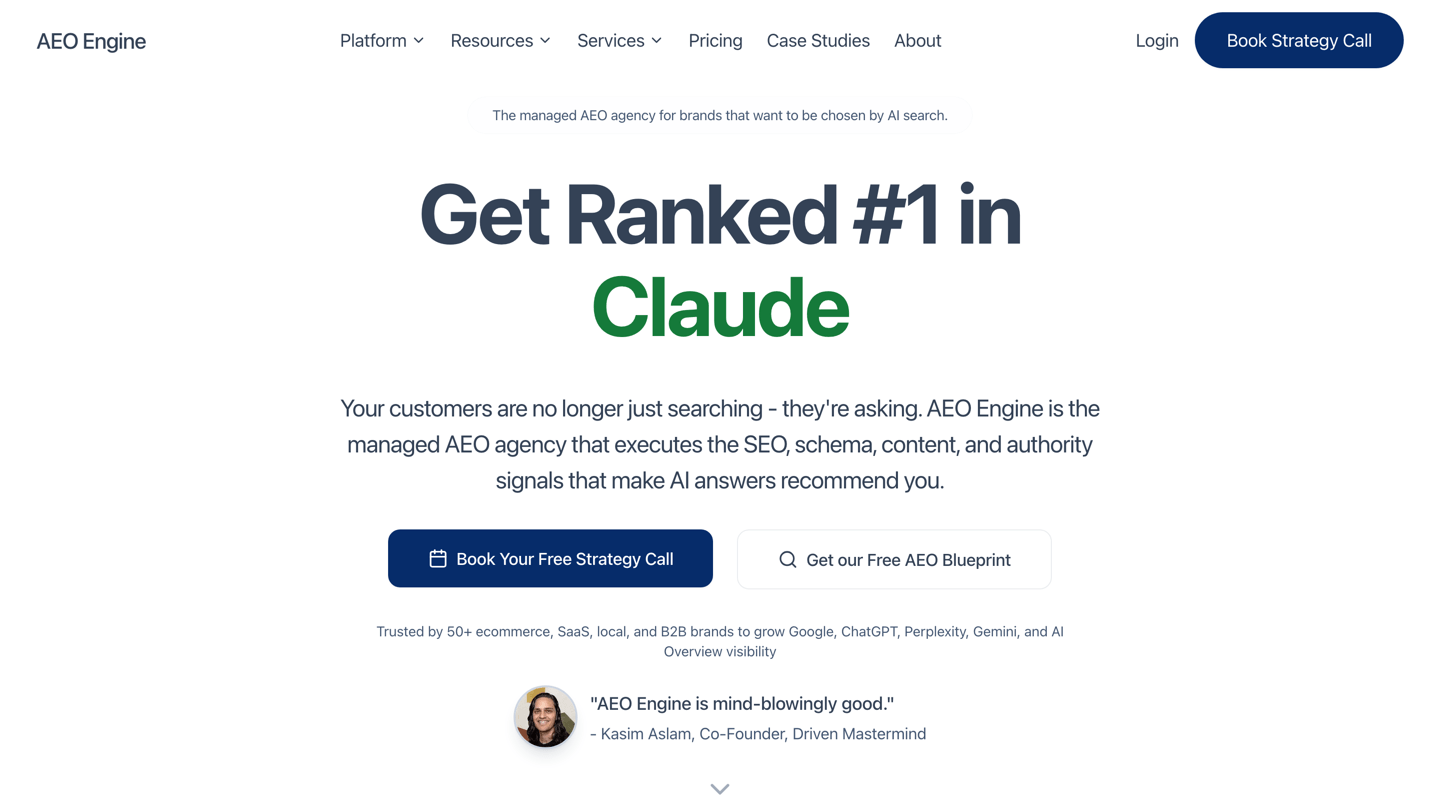
AEO Engine is a managed service that publishes 30 to 60 SEO- and AEO-optimized articles per month with full schema markup, auto-publishing to CMS, and social repurposing included. It operates on month-to-month contracts and is trusted by 50+ brands.
AEO Engine removes the build-vs-buy decision entirely for teams that want consistent AEO-structured content output without assembling or managing their own tool stack. Month-to-month contracts reduce commitment risk while the team evaluates output quality.
Best for: Brands that prefer to outsource the full content pipeline rather than manage tools in-house.
Worth noting: A managed service model means less direct control over content direction and editorial strategy. AEO Engine is not a self-serve option for teams that want hands-on pipeline ownership.
The insight most AEO tools won't surface for you
Here's the practical implication buried in the Louise Linehan data: if only 12% of AI-cited sources overlap with Google's top 10, your existing rank tracker is giving you almost no directional signal about AI visibility. Teams that optimize only for Google rankings are essentially flying blind on AEO performance.
The right starting point, regardless of which tool you choose, is citation tracking before content investment. You can't optimize toward a target you can't measure. Run your brand and your core category questions through a tracker, identify which AI engines mention you, at what frequency, and for which prompts. That data tells you exactly where to spend content budget next, whether that means fresh AEO articles, structural rewrites, or schema fixes.
Match the tool to your pipeline stage
- Need the widest engine coverage plus content creation and agency-friendly pricing: Temso's AI Search Analytics and Content for AEO covers eight engines, starts at $89/month, and includes unlimited seats with multilingual tracking.
- Have a large existing library and need AEO rewrites without undoing SEO gains: Jasper or Contently covers the optimization stage without risking organic rankings.
- Want end-to-end automation from topic discovery to daily publishing: Superlines or AEO Engine go furthest on full pipeline automation.
- Just need a standalone tracker rather than a full stack: Gauge is a focused point solution for citation tracking across five engines daily.
- Tight budget or evaluating before committing: Reach360's free forever plan lets you start tracking without a credit card.
Start by running a citation audit on your brand across ChatGPT, Perplexity, and Google AI Overviews. Sign up for Temso and your first recommended actions are ready within a week.